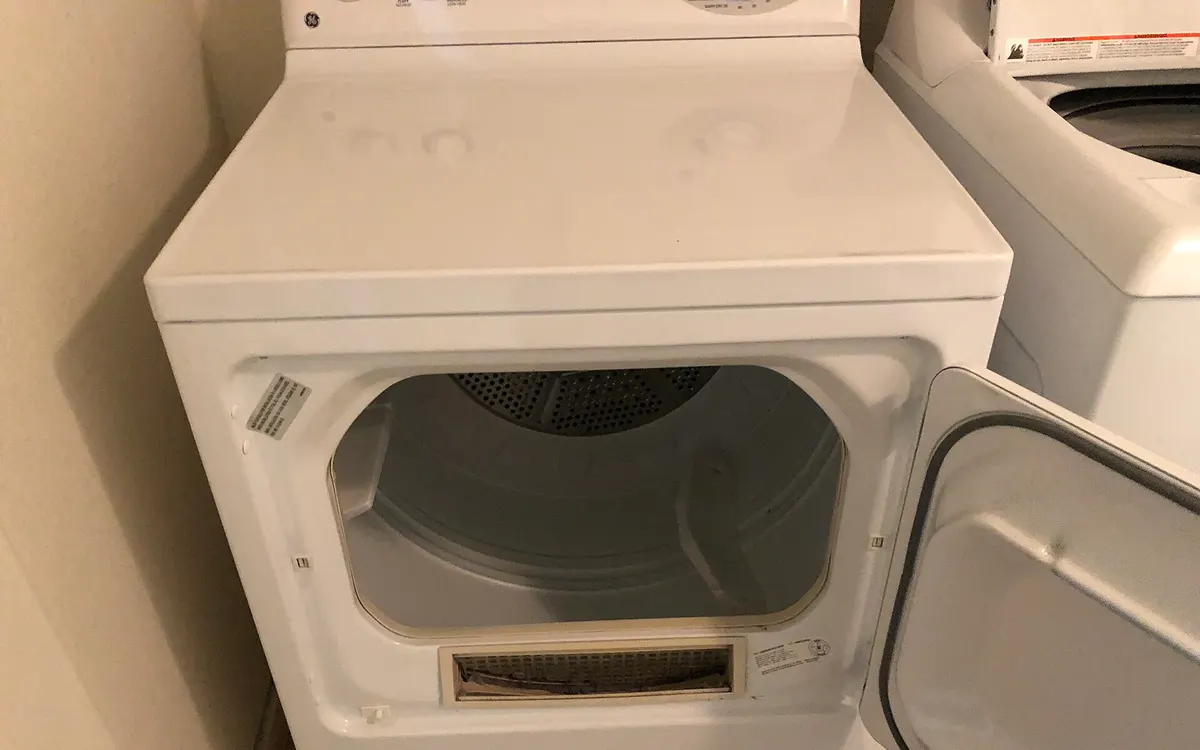
The 7 warning signs
| What you notice | What it usually means | What to do |
|---|---|---|
| Towels need two cycles | Air cannot get out of the duct | Clean the duct today |
| Top of the dryer is hot to the touch | Heat is trapped inside | Stop using it until it is cleaned |
| Burning smell | Lint near the heat source | Unplug it and clean it before the next load |
| Laundry room gets humid or warm | Duct is blocked or disconnected | Check the duct behind the dryer |
| Outside flap does not open when running | Lint or a nest blocking the exit | Clear the outside vent |
| Lint on the floor behind the dryer | Duct is torn or loose | Reconnect or replace it |
| It has been more than a year | Lint builds up even when it works fine | Clean it anyway |
One sign is a reason to check. A burning smell or a hot top is a reason to stop using the dryer until it is fixed.
The 10-minute clean
1. Unplug and pull it out
Unplug the dryer (or switch off its breaker) and slide it away from the wall. With a gas dryer, move it gently so you do not stress the gas line.
2. Lint screen and slot
Pull out the lint screen and remove the lint. If you use dryer sheets, wash the screen with warm soapy water and a soft brush now and then: ENERGY STAR notes that dryer sheets can leave a film on it that reduces airflow. Let it dry. Then vacuum the slot it slides into with a long crevice tool. Lint hides in there.
3. Disconnect the duct
Loosen the clamp on the back of the dryer and pull the duct off. Vacuum the opening on the dryer.
4. Clean the duct
Push a vent brush through the duct, twisting as you go, then pull it out and vacuum the lint. If the duct is long, clean from both ends: from the dryer side and from the outside vent.
5. Clear the outside vent
Go outside while someone runs the dryer on air-only for a minute. You should feel strong airflow and see the flap open. If not, clean the flap and the last few feet of duct.
6. Reconnect
Reattach the duct, tighten the clamp, push the dryer back without crushing the duct, and run a short cycle to check.
Fix the duct itself
Look at what is behind your dryer:
- White plastic or thin foil accordion hose: it crushes easily and its ridges catch lint. Most dryer manuals call for metal duct. Replace it with rigid or semi-rigid metal duct, as short and straight as possible.
- Long runs or many bends: lint settles at every turn. Clean these at least twice a year.
- Duct crushed behind the dryer: leave a few more inches of space.
Your dryer’s installation manual lists the maximum duct length and the materials allowed for your model.
Duct materials compared
| Duct type | Looks like | Lint buildup | Crush risk | Common verdict |
|---|---|---|---|---|
| White vinyl / plastic accordion | Flexible white tube | High (ridges) | High | Many manuals say do not use; replace |
| Foil accordion | Thin silver, crinkly | High | High | Replace with metal |
| Semi-rigid aluminum | Silver, flexible but stiffer | Medium | Medium | Common for the short connection behind the dryer |
| Rigid metal (smooth) | Straight metal pipe | Low | Low | Best for the run inside walls and ceilings |
Your dryer’s installation instructions list the duct materials and the maximum length allowed for your model, usually counting each elbow as extra length. A long run with many bends needs more frequent cleaning even with a good duct.
How often to clean the duct, by household
| Household | Loads a week | Duct cleaning |
|---|---|---|
| 1–2 people | 2–4 | Once a year |
| Family of 4 | 6–10 | Every 6–12 months |
| Pets that shed, lots of towels | 8+ | Every 6 months |
| Long duct run (over about 15 ft) or several elbows | Any | Every 6 months, check the outside flap monthly |
These are practical intervals, not official rules. The official ones are simpler: clean the lint screen every load (ENERGY STAR) and do not let lint build up in the duct.
Gas dryers: extra checks
- Carbon monoxide: a gas dryer vents combustion gases through the duct. A blocked or disconnected duct can push them back into the home. Make sure you have a working carbon monoxide alarm on every level of the home, as fire-safety organizations recommend.
- The gas line: when you move the dryer, do not kink or strain the flexible gas connector. If you smell gas, do not touch light switches; leave the house and call your gas utility from outside.
- Pilot or igniter problems are for a technician, not a cleaning job.
DIY or call a pro?
| Situation | DIY | Pro |
|---|---|---|
| Short duct, straight out the wall behind the dryer | Yes | — |
| Duct runs through the attic, ceiling or a long wall | Hard; brush kits may not reach | Recommended |
| Bird or rodent nest at the outside vent | Remove carefully with gloves if reachable | If it is high or the duct is damaged |
| Crushed or disconnected duct inside a wall | — | Yes |
| Burning smell even after cleaning | — | Yes, stop using the dryer |
Common mistakes
- Vacuuming only the lint screen and never the slot under it.
- Pushing the dryer flat against the wall, crushing the duct.
- Using duct tape to seal joints: heat makes it fail. Use foil tape made for HVAC, or the clamps that came with the duct.
- Screws through the duct joints: they catch lint. Most instructions call for clamps or foil tape instead.
- Drying rubber-backed bath mats or anything with oil or chemical stains, against the care label.
- Covering the outside vent with a screen: screens catch lint and block the flow. Use a proper dryer vent hood with a flap.
FAQ: quick answers
How long should a load of towels take to dry? With a clear vent, a normal towel load usually dries in one regular cycle. Two cycles is your warning sign.
Can I use a leaf blower to blow out the duct? Some people do from the inside out with the duct disconnected from the dryer, but it scatters lint everywhere and does not remove buildup stuck to the walls. A brush kit works better.
Do dryer sheets cause fires? Not directly, but ENERGY STAR notes they can leave a film on the lint filter that reduces airflow. Wash the screen now and then.
The 30-second lint screen water test
Even a screen that looks clean can be clogged with an invisible film from dryer sheets and fabric softener. To check it:
- Pull the screen out and remove the lint.
- Hold it under the faucet and run water onto it.
- If the water runs straight through, the mesh is clear.
- If the water pools on top, the mesh is coated. Scrub both sides with warm water, a drop of dish soap and a soft brush, rinse, and let it dry completely before putting it back.
Do this every month or two if you use dryer sheets. A coated screen restricts airflow the same way a clogged duct does, and it is the cheapest fix on this page.
Habits that keep it clear
- Clean the lint screen every single load.
- Do not overload the dryer.
- Do not dry anything stained with oil, gasoline or cleaning chemicals in the dryer; wash it more than once and line dry.
- Do not run it while you are out or asleep.
- Clean the duct at least once a year, more often if you dry a lot of towels or have pets.
Fresh towels depend on the washer too: here is how to clean a smelly washing machine and how to get the musty smell out of towels. The dryer vent is already on our seasonal cleaning checklist.
Sources
- ENERGY STAR: Clothes Dryers (clean the lint filter every load)
- US Fire Administration: Home Fires
- NFPA: Home Fire Safety
Always follow the label on your product. Labels are the legal use instructions in the US.
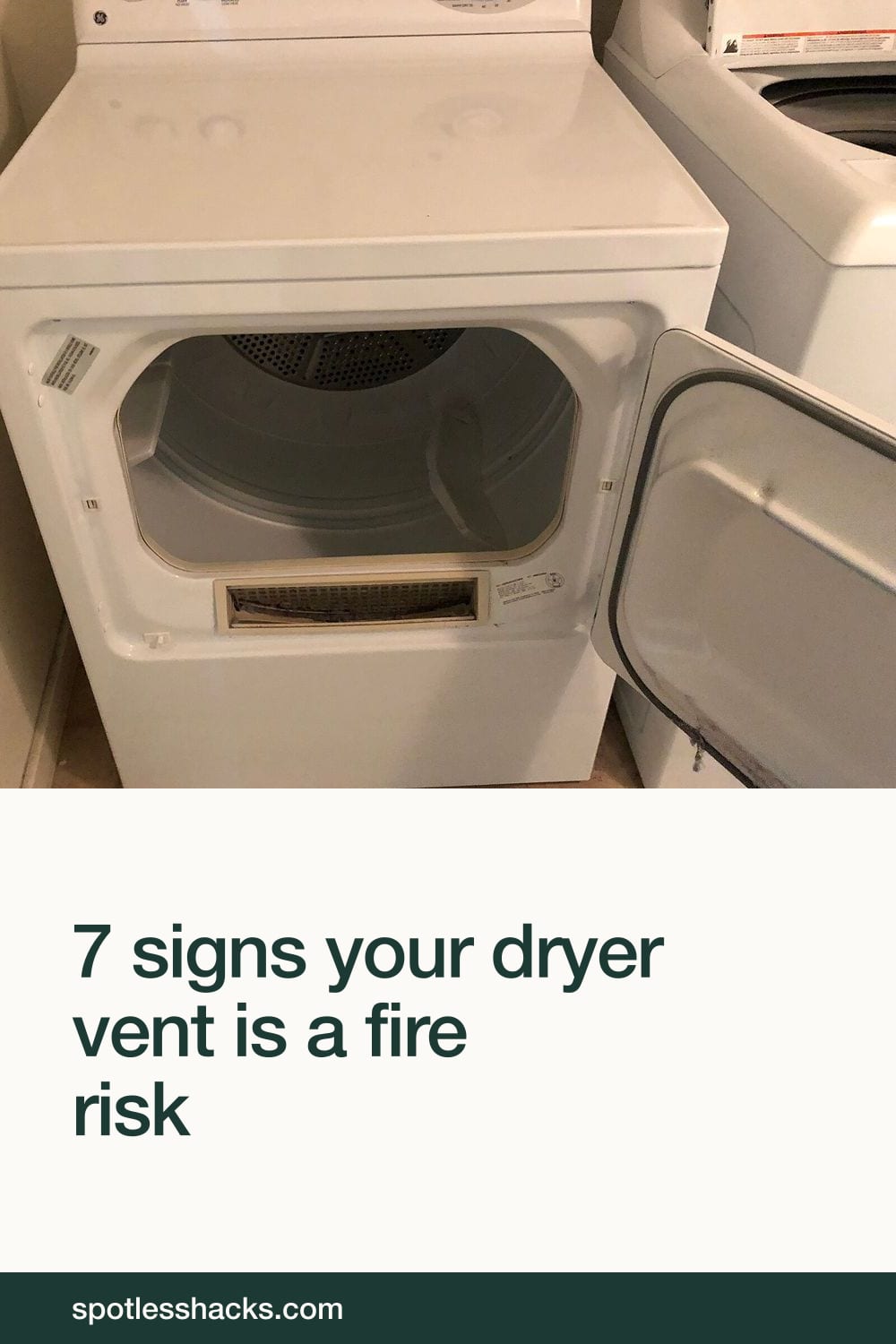
Save this for cleaning day. Pin it so you can find it later.
Save to Pinterest Read next Hotel Housekeeper Secrets Part 2: Bathroom Tricks and Hotel Finishing Touches