The EPA schedule, as a checklist
| When | What to do |
|---|---|
| Every day | Unplug, empty the tank, wipe all surfaces dry, refill with fresh water |
| Every third day | Full clean: scrub off scale, deposits and film; rinse well |
| Whenever you use a cleaner | Rinse the tank thoroughly so no chemical is misted into the air |
| Per the manual | Replace filters, wicks or cartridges |
| End of season | Clean, dry completely and store dry; throw out old filters |
Source: EPA’s “Use and Care of Home Humidifiers”. For everything else in the house, see how often to wash everything. Your manufacturer’s manual comes first for your specific model, especially on what cleaners are allowed.
Step-by-step: the every-third-day clean
1. Unplug and empty
Unplug it, empty the tank and the base, and take off any removable parts.
2. Descale with vinegar
Most manuals allow white vinegar for removing mineral scale. Fill the tank partway with undiluted white vinegar, swish it around, and pour some into the base. Let it sit 20 to 30 minutes. (If your manual says otherwise, follow it.)
3. Scrub
Scrub the inside of the tank, the base and any small parts with a bottle brush or an old toothbrush. Pay attention to the corners and the little reservoir where water sits.
4. Rinse until it does not smell
Rinse every part with clean water several times. You should not smell any vinegar.
5. Disinfect (only if your manual says so)
Some manuals recommend a weak bleach or hydrogen peroxide rinse now and then. If you do it, do it on a different day from the vinegar or after a very thorough rinse, never together, and rinse again until there is no smell.
6. Dry and refill
Wipe everything dry and refill with distilled or demineralized water.
Why 50% matters
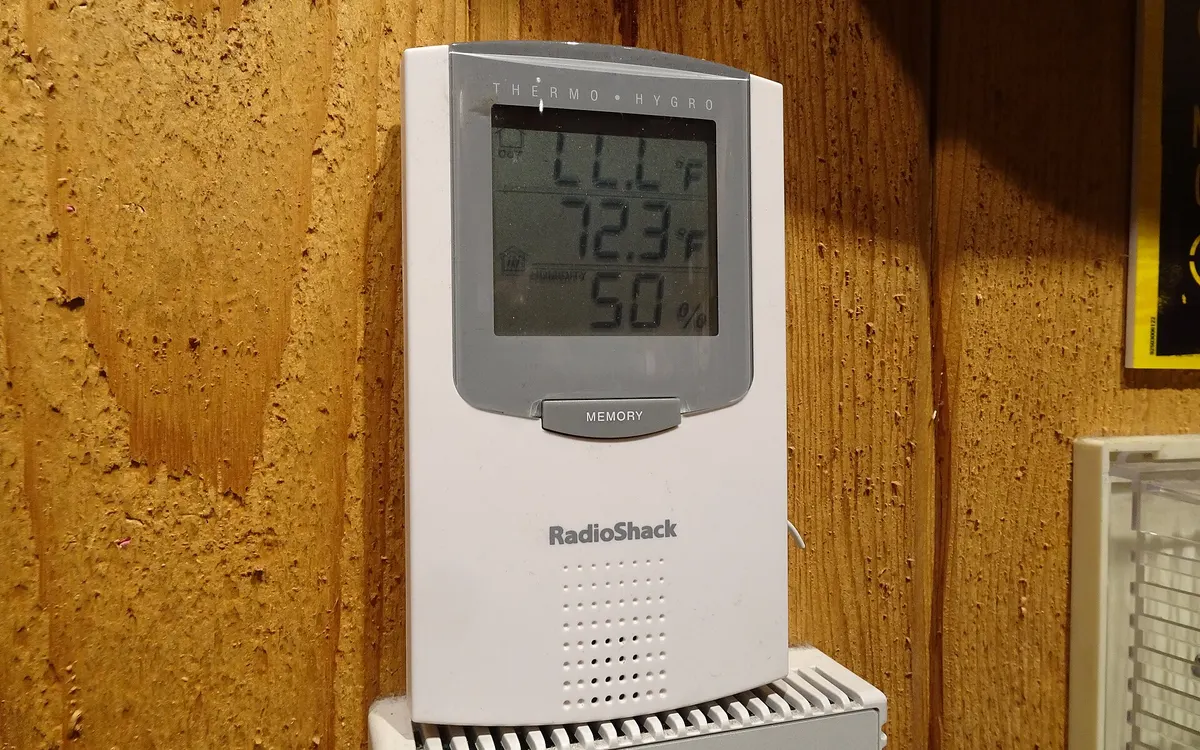
The EPA advises not to humidify above 50% relative humidity, because higher levels encourage mold, dust mites and other biological growth. Most people are comfortable around 30 to 50% in winter. A cheap hygrometer tells you where you are; some humidifiers have a built-in humidistat you can set.
Signs you are overdoing it: condensation on the inside of windows, damp spots on walls, or a musty smell.
Tap water or distilled?
Tap water works, but its minerals end up as scale in the tank and, in ultrasonic and impeller models, as white dust in the air. The EPA recommends water with low mineral content, such as distilled water. A gallon of distilled water usually costs less than $2 at a US supermarket.
Storing it for summer
Do a full clean, let every part dry completely for a day, throw out used filters or wicks, and store it in its box. Putting it away damp is how you open it next winter to a moldy surprise.
Dry air season is also mattress and bedding season: our guides on deep cleaning a mattress and when to replace pillows cover the dust-mite side of indoor air.
Sources
- EPA: Use and Care of Home Humidifiers
- EPA: Biological Contaminants and Indoor Air Quality
- EPA: Asthma Triggers (mold and dust mites)
Always follow the label on your product. Labels are the legal use instructions in the US.
Save this for cleaning day. Pin it so you can find it later.
Save to Pinterest Read next How to Clean a Kitchen Sponge (and When to Just Throw It Out)