Why this trick works
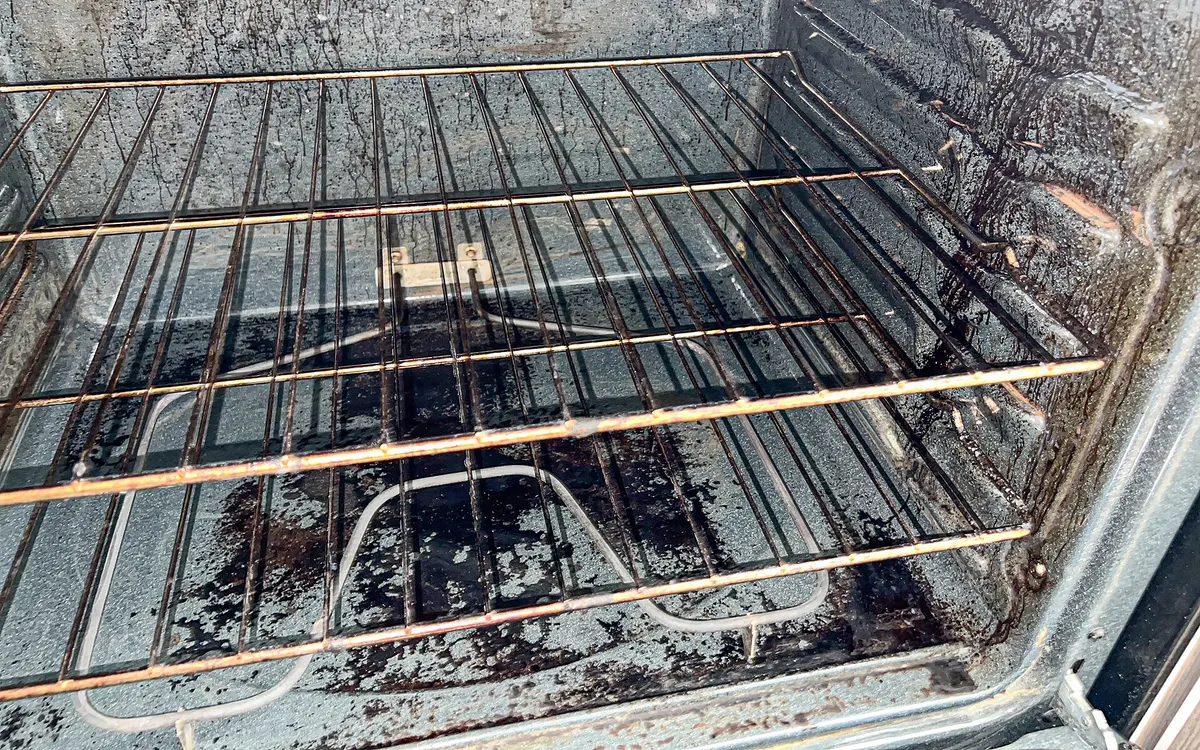
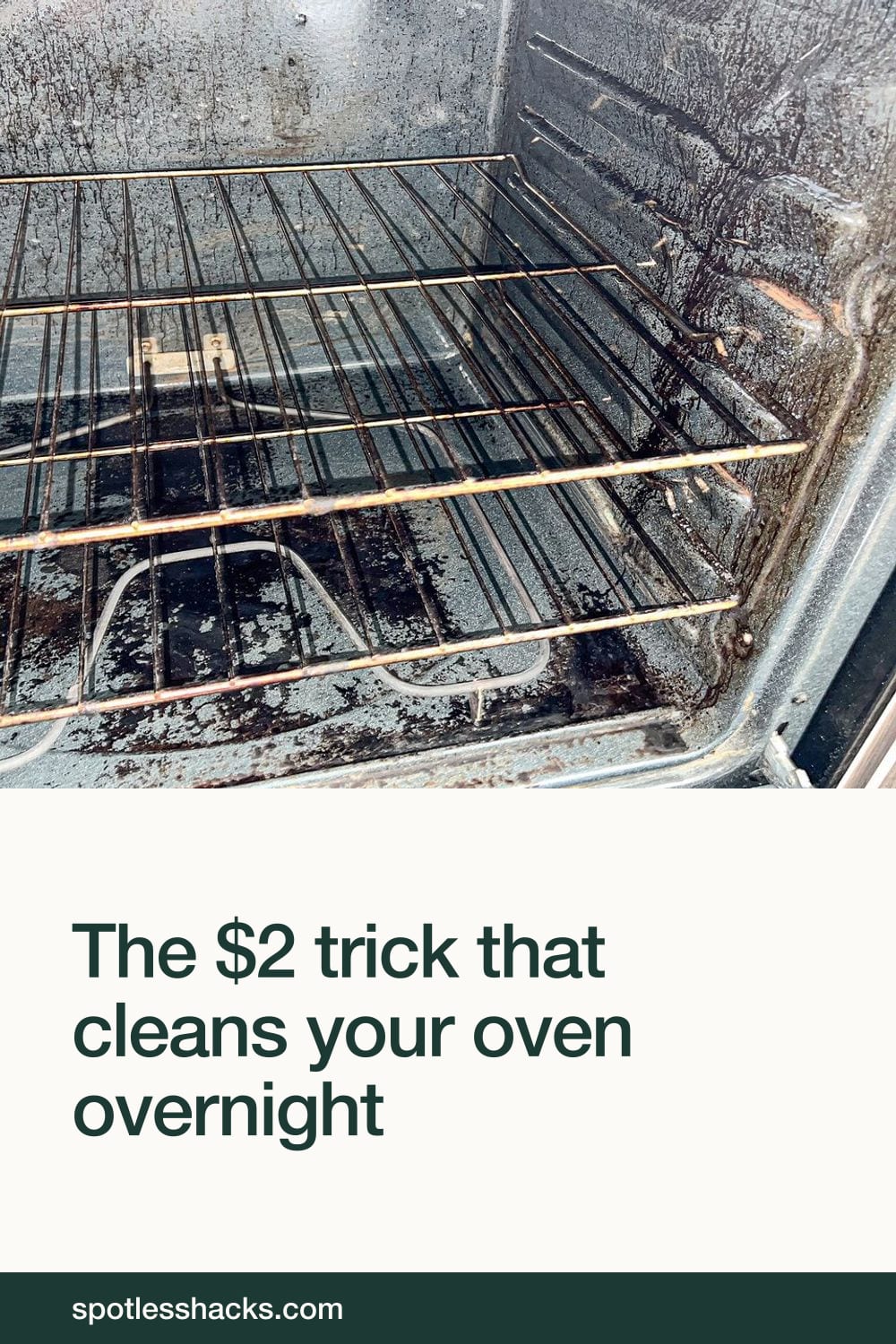
Baked-on oven grime is mostly fat and sugar that turned acidic and sticky with heat. Baking soda is mildly alkaline, so it slowly breaks down that grease. It is also gently abrasive, which helps when you wipe. Because it works slowly, time does what elbow grease would normally do.
It will not perform miracles in 10 minutes. It performs very well in 12 hours.
What you need
- 1/2 cup baking soda (more for a big or very dirty oven)
- 3 to 4 tablespoons of water
- White vinegar in a spray bottle
- Rubber gloves
- A plastic scraper, spatula or old gift card
- A couple of damp cloths or a sponge
Total cost if you have nothing at home: about two dollars.
Step 1: Empty the oven and let it cool
Pull out the racks, the pizza stone and the oven thermometer. Brush out loose crumbs with a dry cloth. The oven must be completely cold. Paste on a warm oven dries too fast and bakes on.
Racks tip: put the racks in the bathtub on an old towel, sprinkle with baking soda, pour in very hot water to cover, add a squirt of dish soap and leave them overnight too. Scrub in the morning.
Step 2: Make a spreadable paste
Mix the baking soda with water a spoon at a time. You want something like thick frosting: it should stick to a vertical wall without sliding. Too runny and it pools at the bottom. Too dry and it falls off.
Step 3: Coat everything (except the elements)
Wearing gloves, smear the paste over the oven floor, the walls and the inside of the door. Pile it thicker on the worst spots. On an electric oven, keep it off the heating elements. On a gas oven, keep it away from the slots where the gas comes in.
Do not worry if it looks patchy or turns brown in spots. That is the grease already moving.
Step 4: Close the door and go to bed
Leave it for at least 12 hours. Overnight is perfect. For a very neglected oven, give it a full day.
Step 5: Scrape, then wipe
Use the plastic scraper to push the softened gunk toward the front. Most of it should come away in brown, crumbly sheets. Then wipe with a damp cloth, rinsing it often.
Step 6: The vinegar fizz
You will see a thin white film left behind. Spray a little vinegar on it. It will foam: that is the vinegar reacting with the leftover baking soda and lifting it. Wipe again with a clean damp cloth until the surface is clear. Dry, put the racks back and you are done.
The door glass trick
The glass between the two panes is a different story: grease drips in through the vent slots. Some ovens let you remove the inner pane (check your manual). If not, a long thin tool like a yardstick wrapped in a cloth can reach in. For the visible inner glass, the same paste works; give it an extra hour and wipe with a razor scraper held flat if it is tempered glass.
Mistakes to avoid
- Using metal scourers. Steel wool scratches enamel and makes future grime stick even more.
- Turning the oven on with paste inside. It bakes into a white crust that is harder to remove than the original grease.
- Mixing products. Do not add bleach, ammonia or commercial oven cleaner to the paste. Ammonia plus bleach makes toxic chloramine gas; here is the full list of products you should never mix.
- Soaking the bottom with water. Use damp cloths, not a bucket. Water can reach the electronics under the floor.
Baking soda vs. oven cleaner vs. self-clean
| Method | Time | Cost | Fumes | Best for | Avoid when |
|---|---|---|---|---|---|
| Baking soda paste overnight | 12–24 h waiting, 30 min work | About $2 | None | Regular cleaning, moderate buildup | You need the oven tonight |
| Commercial oven cleaner (lye-based) | 20 min–overnight | $6–$12 a can | Strong | Heavy, old buildup | Self-clean enamel, aluminum, poor ventilation |
| Self-clean cycle | 2–4 h | Electricity | Smoke and odor | Very dirty ovens, if your manual allows | Pet birds in the home, heavy spills on the floor |
| Steam clean setting | 20–30 min | Almost nothing | None | Light, fresh splatters | Old carbonized grime |
Lye-based oven cleaners work fast, but they are corrosive. If you use one, follow the label to the letter: gloves, eye protection, windows open, and never on top of baking soda paste or any other cleaner.
The self-clean cycle heats the oven to very high temperatures to burn residue to ash. It produces smoke and fumes; many manufacturers advise ventilating the kitchen and keeping pet birds out of the area, because birds are very sensitive to fumes. Check your manual before you use it.
How long to leave the paste
| How dirty | Paste thickness | Wait |
|---|---|---|
| Light splatters, cleaned in the last 3 months | Thin layer | 6–8 hours |
| Brown film, a few drips | Normal (frosting-like) | 12 hours |
| Black spots, burnt sugar, pizza cheese | Thick on spots | 24 hours, mist with water if it dries |
| Never cleaned, years of buildup | Two rounds | 24 hours, scrape, repeat on spots |
Glass, racks, knobs: the parts people forget
Oven door glass (inside face): the same paste works. For stubborn brown spots on tempered glass, a razor scraper held almost flat lifts them without scratching. Never use a razor on enamel.
Racks: the bathtub method above, or put them in a large trash bag with 1/2 cup of baking soda and hot water, close the bag, and leave overnight. Many manuals say chrome racks should not stay inside during self-clean because they discolor and stop sliding smoothly.
Knobs and control panel: pull the knobs off (most pull straight out), soak them in warm soapy water, and wipe the panel with a barely damp cloth. Never spray anything onto the control panel.
Oven light cover: once the oven is cool and the power is off, unscrew the glass cover if your model allows it and wash it in soapy water.
Range hood filter: the grease above the stove is the next thing to deal with; the range hood filter soak takes 20 minutes.
Four more mistakes (and what happens)
- Paste on the gas inlet slots: it can block the gas flow. Keep it away from the burner area in gas ovens.
- Leaving the racks in during self-clean: many manuals say chrome racks discolor and stick afterward.
- Scrubbing the door gasket: the soft rope seal around many oven doors tears easily. Leave it alone or dab it gently.
- Using foil on the oven floor: many manufacturers say not to line the bottom with foil, because it can trap heat and damage the finish. Use a sheet pan on the lowest rack instead.
FAQ: quick answers
Can I use this on a gas oven? Yes, keeping the paste away from the burner slots.
Does it work on a convection fan cover? Yes, but do not push paste through the fan grille.
Can I add dish soap? A squirt of dish soap in the paste helps on greasy walls. Do not add anything else.
How often should you clean the oven?
Every three months is enough for most households. Put a sheet pan on the lower rack when you roast or bake anything juicy, and spills will hit the pan instead of the oven floor. Wipe fresh spills once the oven cools, before they carbonize. While you are at it, the grease above the stove collects in the range hood filter, which needs a soak every few months; both jobs are on the monthly cleaning checklist.
If it does not work
If some black spots will not budge, they are fully carbonized. Repeat the paste on just those spots for another night, or use a razor blade scraper held almost flat on glass only. If your oven has a self-clean cycle, you can use it, but open windows, remove the racks, and never run it with paste or cleaner inside.
Next up: your microwave can be cleaned in five minutes with half a lemon.
FAQ
Can I leave baking soda in the oven for 24 hours?
Yes. For very heavy buildup, 24 hours works even better. Just keep the paste damp by misting it with water if it dries out completely.
Is baking soda safe on a self-cleaning oven?
Generally yes, as long as you rinse it all off before you run the oven. Some manufacturers advise against any cleaner on self-clean enamel, so check your manual.
Why do I need vinegar?
Baking soda leaves a chalky white film. A little vinegar reacts with it and makes it easy to wipe away. Use it only after the paste, never mixed in a closed bottle.
Sources
Always follow the label on your product. Labels are the legal use instructions in the US.
Save this for cleaning day. Pin it so you can find it later.
Save to Pinterest Read next When to Replace Your Pillows and Mattress (The Fold Test and Other Signs)