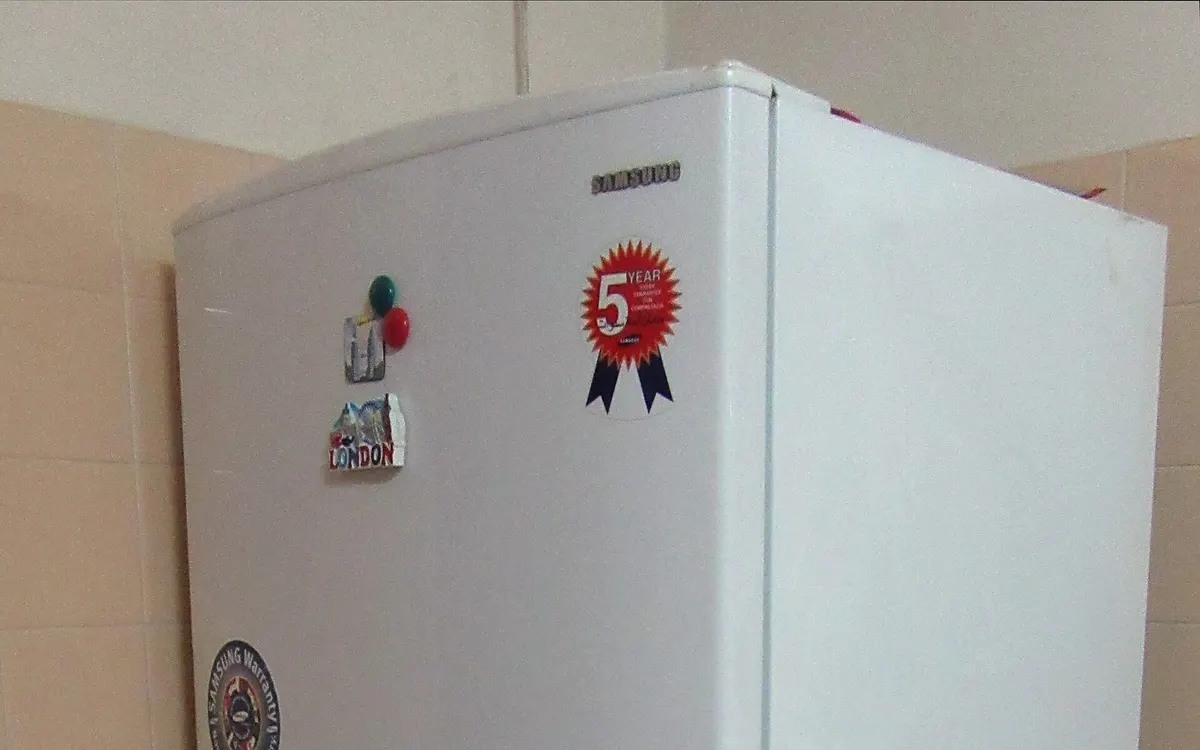
It is also the reason some fridges feel warm on the sides or hum more than they used to.
First, find your coils
| Fridge type | Where the coils usually are | How to reach them |
|---|---|---|
| Most newer top- or bottom-freezer models | Underneath, behind the front kick plate (grille) | Pull the grille straight off; brush from the front |
| Older models | Flat black grid on the back | Pull the fridge out from the wall |
| Side-by-side | Underneath, behind the grille | Front access, long brush |
| Built-in models | Often on top, behind a panel | Follow the manual; some need a pro |
| “No-clean” or sealed coils | Hidden inside the cabinet | Just vacuum the grille and the floor underneath |
Not sure? Your manual will say. Search the model number (on a sticker inside the fridge door or on the ceiling of the fresh food section) plus “manual”.
Step-by-step
1. Unplug it
Pull the plug or flip the breaker. The fan near the coils can start on its own, and you do not want a brush in it when it does.
2. Take off the grille
Most bottom grilles pop off with a firm pull from both ends. Some have two screws. Put a towel on the floor: a surprising amount of dust is about to come out.
3. Brush toward you
Slide the coil brush in between the coils as far as it goes, then pull it back toward you. Go slowly and repeat across the whole width. If your coils are on the back, brush them top to bottom.
4. Vacuum
Use the crevice tool on everything the brush pulled out, plus the floor under the fridge and the grille itself. Wash the grille in the sink if it is greasy, and dry it.
5. Put it back properly
Clip the grille back on, plug the fridge in and push it back, but leave a few inches of space at the back. A fridge squeezed tight against the wall cannot get rid of its heat either.
How often?
- Every 6–12 months in most homes.
- Every 3–6 months with shedding pets.
- Right away if the fridge runs constantly, feels hot on the sides or the bottom grille is visibly gray.
Put it on your calendar with the other jobs from our monthly cleaning checklist, or let the cleaning schedule generator rotate it into your deep-task days.
While you are down there
- Drip pan: many fridges have a shallow pan near the coils that collects defrost water. If it smells, slide it out, wash it with dish soap and dry it.
- Door seals: close the door on a dollar bill. If it slides out easily, the seal is not tight. Wipe the seal with warm soapy water; replace it if it is torn.
- Inside: do a quick clear-out of old food. Our weekly checklist has it on kitchen day.
Mistakes to avoid
- Using water or spray cleaners on the coils.
- Bending the coils or the thin fins with a stiff tool. Brush gently.
- Forgetting to plug it back in. Set a timer on your phone when you unplug it.
Next kitchen job with the same “nobody does this” energy: the dishwasher filter.
Sources
Always follow the label on your product. Labels are the legal use instructions in the US.
Save this for cleaning day. Pin it so you can find it later.
Save to Pinterest Read next How to Deep Clean a Mattress With Baking Soda (and Remove Stains and Smells)